





Traditional Amalia Doll
29,00€
HANDMADE AMALIA DOLL
1 in stock
Description
Greek dolls entirely handmade.
Traditional Amalia doll . Dressed with Traditional Greek costumes. Each costume is a precise copy,of the genuine traditional ceremonial uniform,like this particular Amalia Doll. They are worn in different locations, perfectures, and islands of GREECE. These traditional costumes carry, centuries of greek history and strugles with the our nation’s conquerors.
Modern period
In the independent Greece, Otto and Amalia were the first to be interested in fashion matters. Amalia created a romantic folksy court dress, which became a national Greek costume still known as the Amalía dress. It follows the Biedermeier style, with a loose-fitting, white cotton or silk shirt, often decorated with lace at the neck and handcuffs, over which a richly embroidered jacket or vest is worn, usually of dark blue or claret velvet. The skirt was ankle-length, unpressed-pleated silk, the color usually azure. It was completed with a soft cap or fez with a single, long, golden silk tassel, traditionally worn by married women, or with the kalpaki (a toque) of the unmarried woman, and sometimes with a black veil for church. This dress became the usual attire of all Christian townswomen in both Ottoman Empire-occupied and liberated Balkan lands as far north as Belgrade.
Otto adopted the fustanella for his personal guard, still in use by the Evzones, members of the Presidential Guard.
Since then, the Greek fashion follows the European standards. However completely black clothing is worn for one year in mourning.
A cliché depicts also the mountainous Cretans wearing black trousers, shirts, black stivania (Cretan type of boot), black sariki (Cretan type of woven headscarf), and gold neck chain.
Ancient period
Clothing in ancient Greece primarily consisted of the chiton, peplos, himation, and chlamys. While no clothes have survived from this period, descriptions exist in contemporary accounts and artistic depictions. Clothes were mainly homemade, and often served many purposes (such as bedding). Despite popular imagination and media depictions of all-white clothing, elaborate design and bright colors were favored.
Ancient Greek clothing consisted of lengths of linen or wool fabric, which generally was rectangular. Clothes were secured with ornamental clasps or pins (περόνη, perónē; cf. fibula), and a belt, sash, or girdle (zone) might secure the waist.Men’s robes went down to their knees, whereas women’s went down to their ankles.
Dimensions/Weight
| Weight | 0,070 kg |
|---|---|
| Dimensions | 24 cm |
Related products


COLLECTIVE COINS
12,00€


COLLECTIVE COINS
26,00€


COLLECTIVE COINS
12,00€


COLLECTIVE COINS
12,00€


COLLECTIVE COINS
19,50€
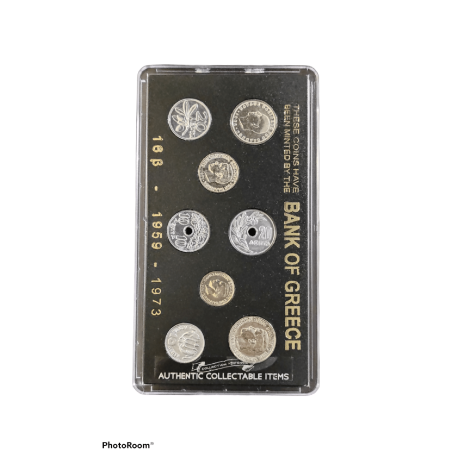

COLLECTIVE COINS
23,00€


COLLECTIVE COINS
12,00€


COLLECTIVE COINS
29,00€