





Clock Ionic column
29,00€
HANDMADE CLOCK WITH IONIC COLUMN
3 in stock
Το συγκεκριμένο προϊόν το βλέπουν αυτή τη στιγμή 5 άτομα.
Description
Clock Ionic column,handmade and painted in museum patina.
Columns in first greek civilizations
Mycenaean civilization, particularly in the megaron or hall at the heart of their palaces. The importance of columns and their reference to palaces and therefore authority is evidenced in their use in heraldic motifs such as the famous lion-gate of Mycenae where two lions stand each side of a column. Being made of wood these early columns have not survived. But their stone bases have and through these we may see their use and arrangement in these palace buildings.
THE COLUMNS IN GREECE AND ROME
The Egyptians, Persians and other civilizations mostly used columns for the practical purpose of holding up the roof inside a building. But the Ancient Greeks, followed by the Romans, loved to use them on the outside as well. And the extensive use of columns on the interior and exterior of buildings is one of the most characteristic features of classical architecture. In buildings like the Parthenon,or Delphoi. The Greeks developed the classical orders of architecture. Which are most easily distinguished by the form of the column and its various elements. Their Doric, Ionic, and Corinthian orders were expanded by the Romans to include the Tuscan and Composite orders.
THIS CLOCK IONIC COLUMN IS THE PERFECT GIFT FOR EVERY HOUSE. BECAUSE IT IS A REMINDER OF THE GREAT CIVILIZATION OF ANCIENT GREECE.
Dimensions/Weight
| Weight | 1,7 kg |
|---|---|
| Dimensions | 20,5 × 8 × 24,5 cm |
Related products

WALL CLOCKS
12,50€

TABLE CLOCKS
13,00€

TABLE CLOCKS
17,00€
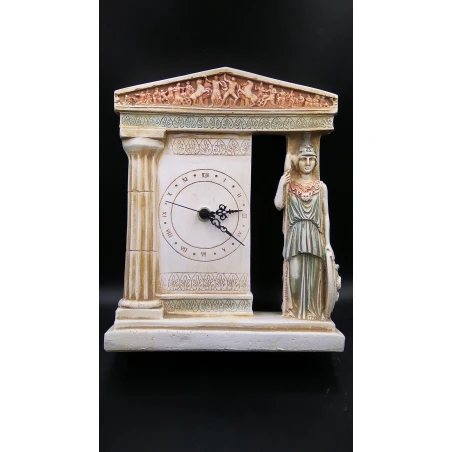

TABLE CLOCKS
29,00€

TABLE CLOCKS
14,00€

Out of stock
TABLE CLOCKS
24,00€

TABLE CLOCKS
13,00€

WALL CLOCKS
32,00€