



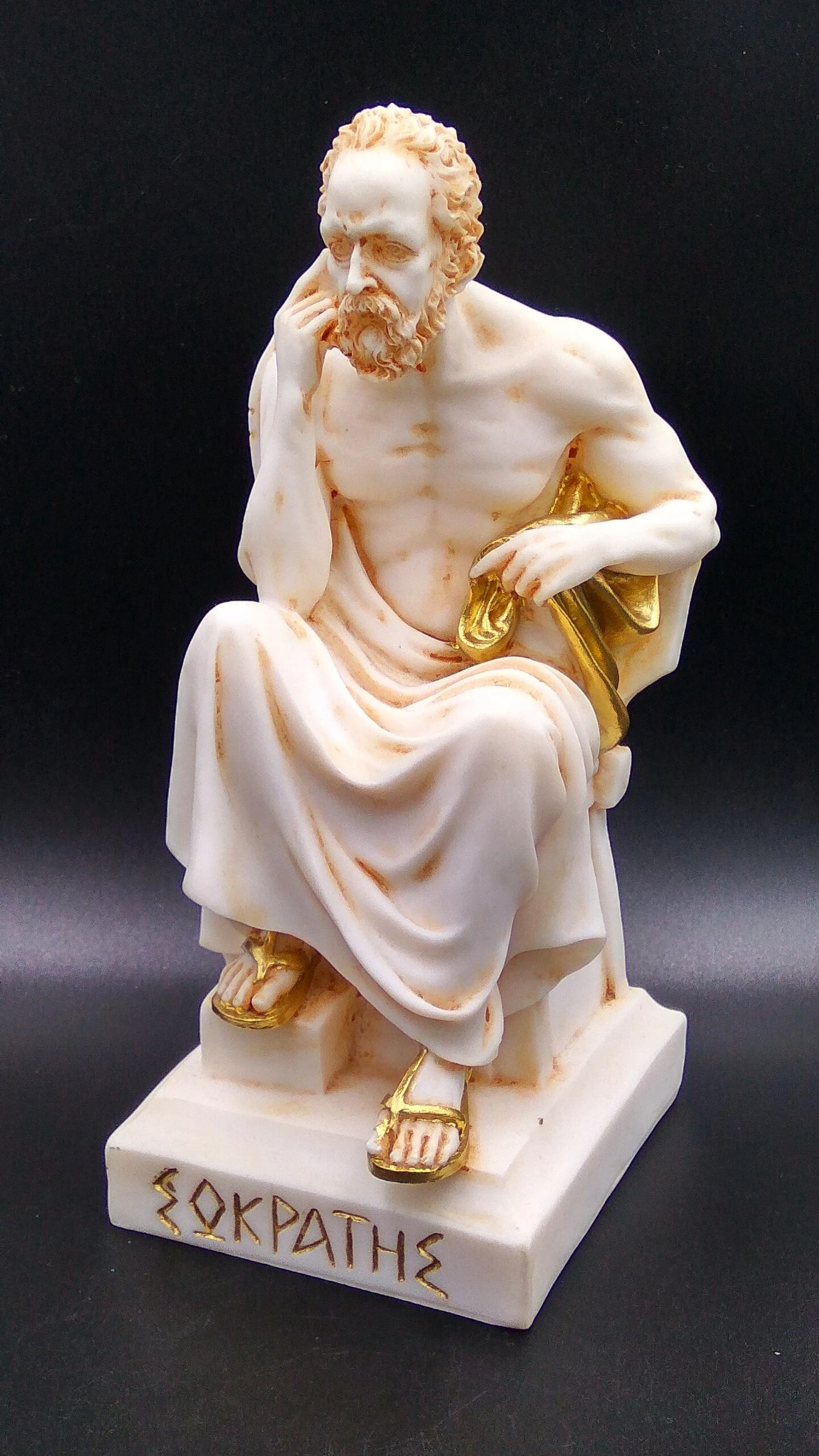
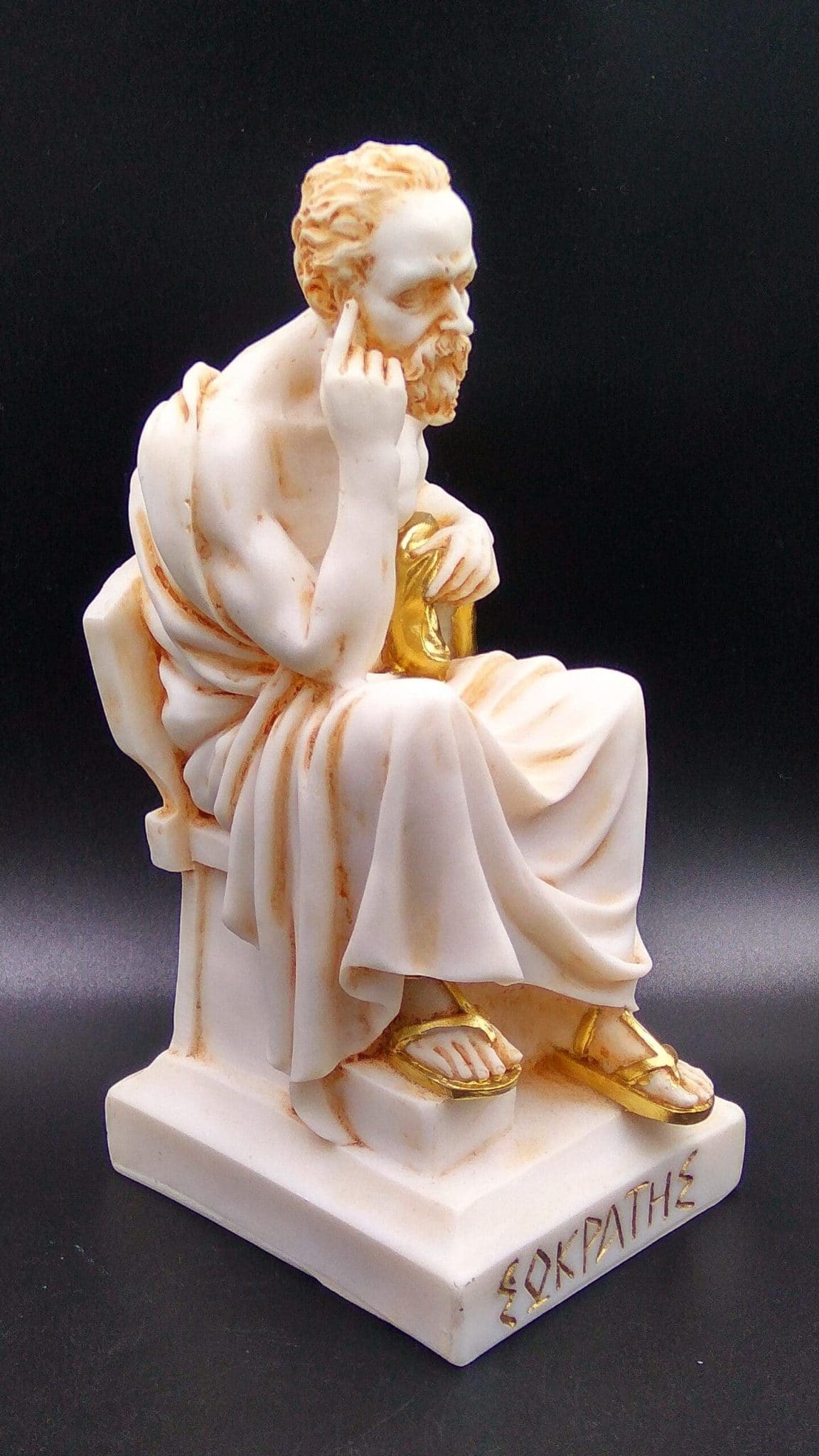


Socrates Thinking
18,00€
STATUE OF SOCRATES THINKING
2 in stock
Description
Socrates Thinking statue. Handmade of moldano and painted in museum aging patina.
Socrates (Ancient Athens, 470 BC -399 BC) was a Greek Athenian philosopher. One of the most important figures of the Greek and world spirit and culture and one of the founders of Western philosophy. Indicative of its importance for Ancient Greek philosophy is that all Greek philosophers before him were called Prosocratic.
THE WORK OF SOCRATES
There are countless scholars who have dealt with Socrates in the centuries since his death, many of whom are very famous. They stopped dealing with natural phenomena and began to deal with man himself and his society. In fact, many philosophers before Socrates dealt with political problems, while Democritus also dealt with ethical issues. However, it was Socrates who really turned philosophical thinking to these issues. Socrates, like Pythagoras, left no book, which is why it is very difficult to determine exactly the content of his philosophy. What is known about Socrates came mainly from what his students wrote about him. As well as some writers who focused on the study of his personality. According to Socrates, God does not philosophize, because he possesses wisdom, but man philosophizes, whose existence is finite.
THE TRIAL AND DEATH
In 399 BC, the philosopher was confronted with the Court of Elias. There, in a trial that has been described by many scholars as a travesty, he was charged with disrespect to the gods and corruption of young people. The philosopher was sentenced, on the basis of the charge, to death. The expediency of the accusation was considered his teaching. Which affected the young people, and with the liberalism that distinguished him, it was considered subversive. .
Socrates turned down Crito’s pleas to attempt an escape from prison. Xenophon and Plato agree that Socrates had an opportunity to escape, as his followers were able to bribe the prison guards. He believed such a flight would indicate a fear of death, which he believed no true philosopher has. If he fled Athens his teaching would fare no better in another country. As he would continue questioning all he met and undoubtedly incur their displeasure. Having knowingly agreed to live under the city’s laws, he implicitly subjected himself to the possibility of being accused of crimes by its citizens and judged guilty by its jury. To do otherwise would have caused him to break his “social contract” with the state, and so harm the state, an unprincipled act. If he escaped at the instigation of his friends, then his friends would become liable in law.
Dimensions/Weight
| Weight | 0,67 kg |
|---|---|
| Dimensions | 17 cm |
Related products


STATUES
115,00€


STATUES
138,00€


STATUES
80,00€
STATUES
116,00€

STATUES
138,00€

STATUES
118,00€
STATUES
360,00€

STATUES
96,00€